The best formula for car washes depends on pH levels, and chemistry is the secret to conquering the toughest grime on vehicles.
Consistent cleaning results drive customer satisfaction and revenue in the car wash industry. You can deliver a flawless result every time by understanding pH levels and using a strategic two-part strategy of acidic and alkaline solutions. This carefully orchestrated sequence attacks the full spectrum of dirt, from organic road film and bug splatter to inorganic mineral deposits and brake dust.
The Ideal Formula Is a Two-Part Strategy
The optimal car wash solution is a two-step process that combines high-pH and low-pH chemicals to tackle grime from every angle. Rather than debating whether acidic or alkaline car shampoo is the better option, professional operators know that a complete cleaning system involves both.
Using low-pH and high-pH solutions in sequence creates a powerful effect, reversing the surface charge on dirt particles and breaking their grip on the vehicle so water pressure can effortlessly rinse them away.
This two-part approach outperforms any single-solution strategy because different types of filth require distinct chemical actions to dissolve and release from the surface.
Understanding the pH Scale in Car Wash Chemistry
The pH scale measures a substance's alkalinity or acidity on a range from 0 to 14. This measurement is critical for determining which contaminants a cleaning solution can effectively break down.
Selecting the correct pH for your car wash solutions lets you eliminate stubborn contaminants such as road salt, brake dust and bug splatter without stripping away the protective waxes, sealants or ceramic coatings customers value.
A pH between 0 and 6 indicates an acidic solution, while a pH between 8 and 14 indicates an alkaline solution. A pH of 7 sits at neutral. Determining where your cleaning chemicals fall on the pH scale for alkaline vs. acidic car wash applications helps you match the formula to the job.
When to Use Low-pH vs. High-pH Car Wash Soap
Different pH levels target different types of contaminants on vehicle surfaces. Knowing when to deploy each type maximizes cleaning efficiency and results.
Use Alkaline, or High-pH, Cleaners to Target Organic Soils
Alkaline car wash solutions serve as the heavy lifters for organic materials, typically operating at a pH between 11 and 14. These cleaners work by chemically breaking down fats and oils that make up most organic soil.
Alkaline solutions remove organic matter through processes such as saponification and emulsification. The cleaner attaches to dirt, grease and oil, breaking them down into tiny suspended droplets that rinse away easily under water pressure. A high-pH cleaner is essential for presoaking vehicles and removing organic soils and protein-based stains such as:
Grease and oil
Bug splatter
Bird droppings
Road film
Use Acidic, or Low-pH, Cleaners to Target Inorganic Deposits
Low-pH or acidic cleaners excel at dissolving inorganic, mineral-based soils that alkaline soaps cannot effectively remove. These formulas work by chemically reacting with mineral deposits to break their bond with the vehicle surface. Cleaners with a pH below 7 dissolve mineral deposits such as:
Road salt residue
Rust stains or iron oxide film
Hard water spots
Calcium buildup
Brake dust
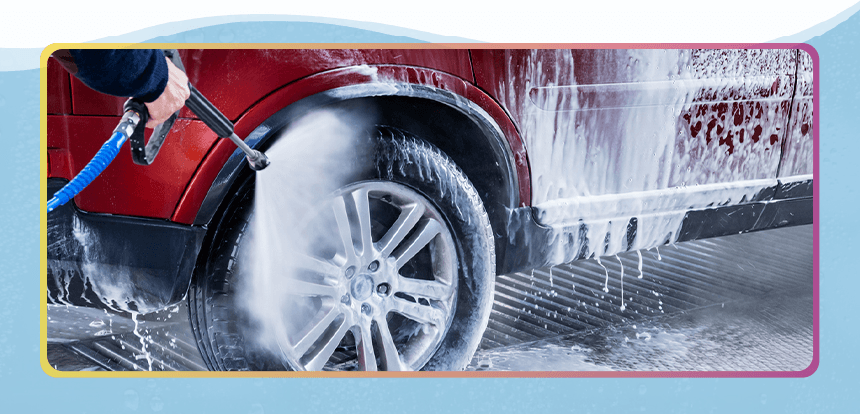
A low-pH cleaner is an excellent solution for cleaning wheels and rims in chemical timing and application systems, where mineral deposits concentrate heavily.
When Should You Use pH-Neutral Cleaners?
pH-neutral soaps work well for daily maintenance washes, but they lack the chemical power necessary to tackle the stubborn grime seen at many professional car washes. Neutral formulas cannot break down the chemical bonds that hold organic oils or mineral deposits to vehicle surfaces.
Professional car washing systems that handle diverse contaminant loads daily should rely on the proven two-pronged acidic and alkaline strategy to ensure consistent, high-quality results.
How to Build Your Two-Step Cleaning Process
Implementing an effective two-step cleaning process requires strategic sequencing and attention to operational variables. The following strategies help you maximize cleaning power and consistency.
Use Chemicals in Sequence to Maximize Cleaning Power in Touchless Washes
Using chemicals in the correct succession creates a powerful cleaning reaction that outperforms single-step approaches. Pay close attention to the application order and the interactions between products.
Start with a low-pH presoak to attack mineral deposits and inorganic soils first. Follow immediately with a high-pH detergent to break down organic compounds. This sequential application reverses surface charges and creates a comprehensive cleaning action that lifts away dirt more effectively than any single soap formulation could achieve. The chemical handoff between acidic and alkaline products ensures complete contaminant removal.
Consider Factors That Impact Cleaning
Several operational variables significantly affect chemical performance and may require formula adjustments to maintain optimal results.
Water hardness: Hard water minerals can reduce the cleaning and foaming capabilities of acidic and alkaline presoaks, diminishing their effectiveness. You may need to adjust chemical concentrations or use water softeners to counteract these effects and maintain consistent performance.
Dwell time: Refers to how long chemicals remain on the vehicle's surface before rinsing, allowing sufficient contact to break down contaminants. Insufficient dwell time leads to incomplete cleaning, while excessive time might cause chemicals to dry onto the surface, creating additional issues.
Equipment: Properly maintained and calibrated equipment delivers chemicals at the correct concentration and pressure for optimal cleaning, maximizing the performance of your chosen formulas.
Frequently Asked Questions
Professional car wash operators often have questions about pH-neutral options and when they fit into a comprehensive cleaning program. The following answers clarify common concerns.
Is Car Wash Soap pH-Neutral?
Some types of car wash soap are pH-neutral, but these solutions are better for shops that perform hand washes or maintenance cleaning on lightly soiled vehicles. Professional car washes that handle heavy contamination depend on high-pH and low-pH formulas for optimal cleaning performance and customer satisfaction.
What Is pH-Neutral Car Wash Soap?
Sitting at the midpoint of the scale, pH-neutral car wash soap is a gentle cleaner with a pH of 7. This neutral formulation doesn't chemically react with acidic or alkaline contaminants.
While it's not the best option for high-volume professional car washes, maintenance shops are familiar with pH-neutral car wash soap benefits such as additional lubrication and protective properties for frequent washes on well-maintained vehicles.
Get Expert Guidance on Your Car Wash Chemistry From JBS Industries
A strategic, two-part chemical approach is essential for delivering the perfect wash every time. Tackle any contaminant and maintain the high-quality results your customers expect with pH-balanced solutions working in sequence.
JBS Industries provides a full range of chemical solutions designed specifically for professional car wash operations. From high-pH presoaks that break down organic soils to low-pH wheel cleaners that dissolve mineral deposits, our product lineup gives you the tools to build the perfect chemical package for your operation.
Our team of experts can help you select the ideal solutions to meet your specific needs. Schedule a personalized consultation or request a quote today.
By choosing our products, you’re investing in quality solutions that enhance operational efficiency while delivering exceptional results for customers.
Start browsing our available products online. For 5-gallon products, you can purchase directly online. For 10-gallon sizes and larger, you can submit a quote, which will be returned promptly. Our team of experts is here to assist you with product selection, technical support and placing your order.