Chemistry is at the foundation of every quality car wash. When you understand how chemicals work together, you can deliver spotless results that keep your customers coming back. Just learning the basics can help you purchase the best products and maximize your profits. You can adjust your cleaners to match your equipment and water conditions, and even troubleshoot issues before they affect your bottom line.
Our guide breaks down the science behind car washes, how products work together, and tips to improve your wash quality and cost per car.
The Core Building Blocks of Car Wash Chemistry
Professional car wash products have five core chemical categories. Car wash businesses use these elements to choose the right products and use them effectively. Together, they make the car wash chemistry formulas you can apply to your specific operation:
Surfactants: These are the workhorses of any cleaning solution. A surfactant molecule has two distinct parts — a hydrophilic, or water-loving, head and a hydrophobic, or water-hating, tail. This unique structure allows surfactants to lower the surface tension of water and form micelles, which are tiny structures that surround and lift dirt particles off the vehicle surface. This is the primary mechanism for removing oily and greasy road film from vehicles.
pH regulators (acids and alkaline substances): The pH scale runs from 0 to 14, with 7 being neutral. Alkaline cleaners operate at high pH, or above 7, and excel at breaking down organic soils like bugs, bird droppings and oils. Acidic cleaners operate at low pH, or below 7, and target inorganic mineral deposits like brake dust, road salt and hard water spots. Professional operators use both types in sequence. Your car wash presoak products are designed to leverage both alkaline and acidic chemistry for maximum soil removal.
Solvents: These specialty chemicals tackle tough contaminants that surfactants struggle with, such as tree sap, tar or heavy asphalt grime. Unlike surfactants that lift soil away, solvents work by dissolving the contaminant directly. They provide a targeted chemical power boost for specific, hard-to-remove soils.
Builders and chelating agents: Think of these as chemical boosters or water softeners. Their job is to neutralize hard water minerals like calcium and magnesium that interfere with cleaning performance. By neutralizing these minerals, builders allow surfactants to work at full strength. This improves cleaning performance and can reduce the total amount of chemical needed, improving cost-effectiveness.
Polymers and protectants: These chemicals create the final visual impact and provide lasting protection to the vehicle. They bond to the clear coat to create a smooth, hydrophobic surface. This hydrophobic layer causes water beading, speeds up drying and protects the paint from UV rays and contaminants. Modern innovations like the next generation of vehicle surface protection use advanced polymer technology to deliver greater shine and durability.
How Chemicals Work Together From Presoak to Final Rinse
Knowing each chemical component is just the first step. Putting that knowledge into practice means recognizing how products work together in sequence. A high-quality wash is a careful process, with each step preparing the vehicle for the next. Tunnel car wash chemicals are made to work in a specific order for the best results:
1. The Two-Step Presoak
The presoak stage delivers a one-two punch by applying both alkaline and acidic chemistry. This process effectively flips the charge on dirt particles, breaking their bond with the vehicle surface. Alkaline presoak attacks organic soils while acidic presoak dissolves mineral deposits. This first step does the heavy lifting in any wash process, making everything that follows far more effective.
2. The Main Wash and Foam Application
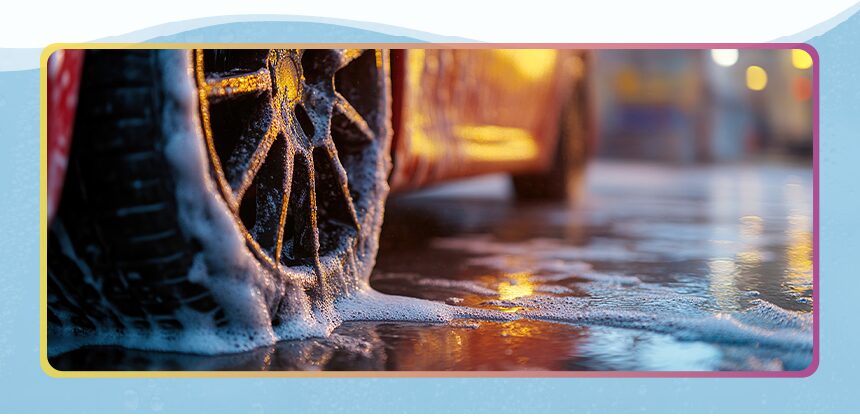
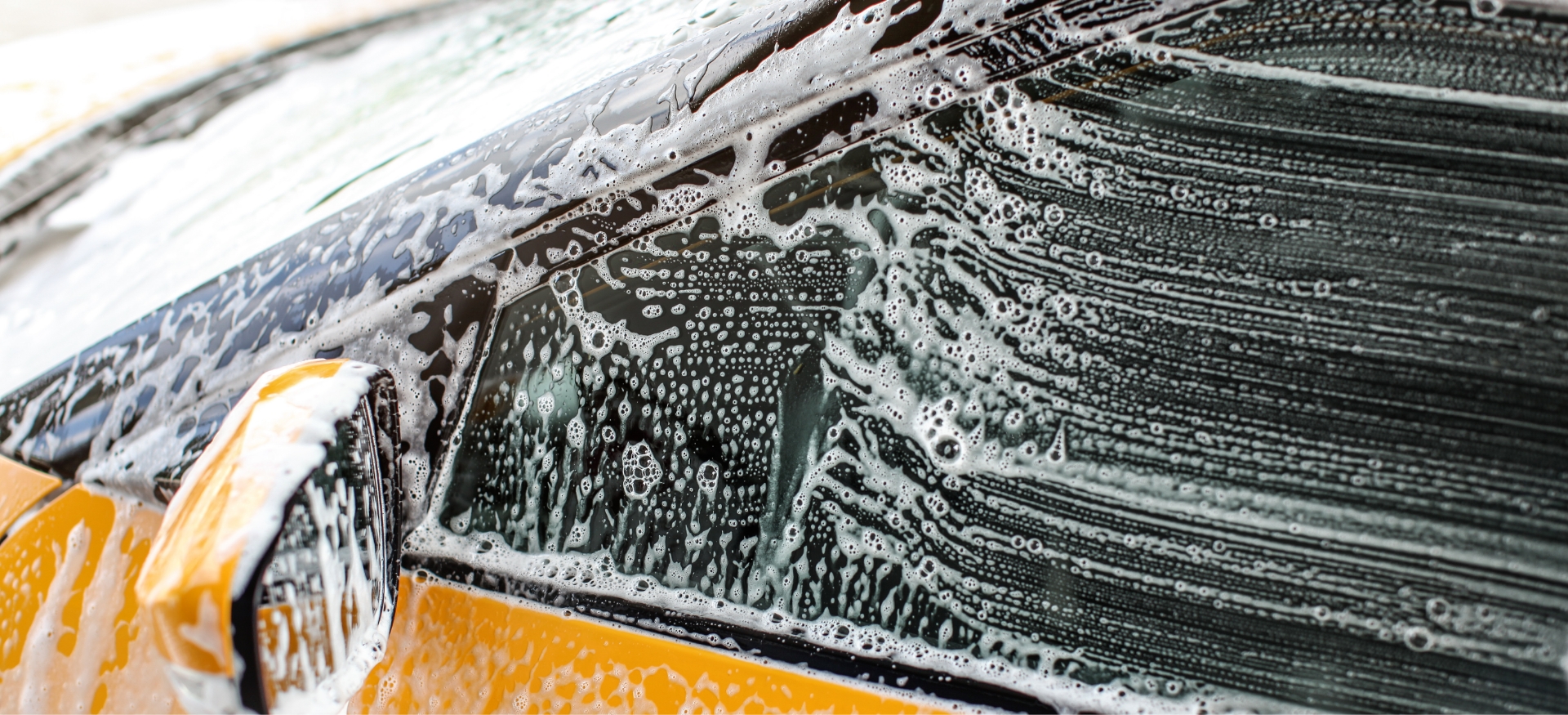
The main detergent contains the bulk of the surfactants that lift away loosened soil. Foam isn't just for visual appeal — it serves important functional purposes in the wash process. Foam increases chemical dwell time by keeping the cleaning agents in contact with the surface longer. In friction washes, it also helps lubricate the surface to protect the vehicle's finish during mechanical cleaning.
3. Waxes, Sealants and Ceramic Coatings
This stage can be a huge profit maker. Traditional waxes provide shine, while modern sealants and ceramic coatings deliver durable protection and hydrophobicity. Modern polymer technology and ceramic formulations create a chemical bond with the clear coat, providing longer-lasting protection than traditional wax products. This is where you can offer premium packages that command higher prices.
4. Drying Agents and the Spot-Free Finish
A drying agent is a specialized surfactant that breaks the surface tension of water, causing it to sheet off the vehicle rather than form beads. This sheeting action greatly aids your air blowers and is crucial for achieving a spot-free finish. In areas with hard water, a proper drying agent is the difference between a satisfied customer and a rewash.
Tips for Optimizing Your Chemical Program
Knowing the chemistry behind your car wash products is valuable, but applying that knowledge will deliver the real returns. These tips can help you control costs and get the most from every gallon of product:
Finding Your Titration and Dilution Ratios
Titration is a testing method that measures chemical concentration in your wash solutions. Work with your chemical supplier to establish optimal dilution ratios for your specific equipment and water conditions. The correct dilution ratio is a balance — too little chemical and vehicles aren't clean, too much and you're losing money on every car.
Factoring in Dwell Time, Temperature and Water Quality
Chemicals need time to work, which is why dwell time matters in every stage of your wash. Water temperature also impacts performance because heat speeds up chemical reactions, though it can also increase evaporation. Hard water requires more chemicals or the strategic use of builders and chelates to maintain cleaning performance. Understanding these variables will help you adjust your program for more consistent results.
Evaluating Cost per Car vs. Cost per Gallon
The true measure of chemical cost is how much product you need to produce a clean, dry and shiny vehicle. A cheap-per-gallon chemical may require higher usage rates, making it more expensive per car washed. Always evaluate products based on cost per car, not just the price per gallon.
Choosing Highly Concentrated Products
Concentrated formulations offer many advantages for cost-conscious operators. Concentrates reduce shipping costs, save valuable space in your chemical room and provide greater control over dilution ratios. This means you can fine-tune your chemical usage to match your exact needs.
Experienced manufacturers who specialize in formulating automotive cleaning products create highly concentrated solutions. These products undergo rigorous testing to meet the highest quality standards. Choosing these partners can help you deliver consistent results and manage your operational costs more effectively.
Partner With a Chemical Expert for a Superior Wash
Understanding car wash soap chemistry is the first step toward a more profitable operation. Applying that knowledge with the right products and expert support is what sets successful operators apart. JBS Industries has been manufacturing highly concentrated car wash chemicals since 1979. Our custom blends deliver reliable chemistry in every batch, and our team of experts provides the customer service you need to optimize your chemical program for your specific operation.
By choosing our products, you’re investing in quality solutions that enhance operational efficiency while delivering exceptional results for customers.
Start browsing our available products online. For 5-gallon products, you can purchase directly online. For 10-gallon sizes and larger, you can submit a quote, which will be returned promptly. Our team of experts is here to assist you with product selection, technical support and placing your order.